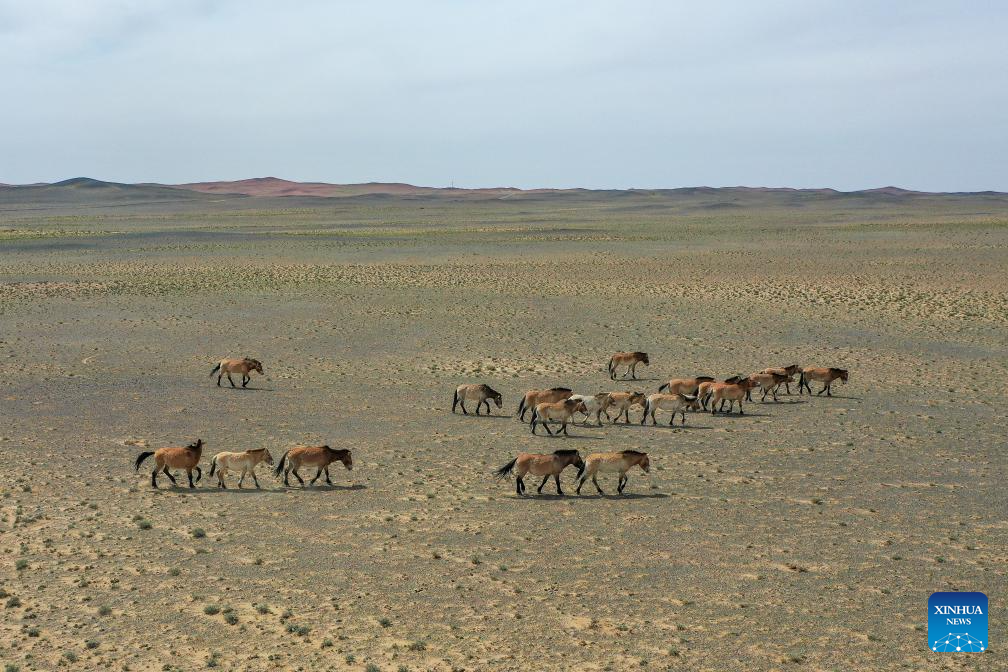
An aerial drone photo taken on April 22, 2026 shows Przewalski's horses released into the wild in the Kalamaili Nature Reserve in northwest China's Xinjiang Uygur Autonomous Region. A total of 30 Przewalski's horses were successfully reintroduced to the Kalamaili Nature Reserve on Wednesday after completing rewilding training. The Przewalski's horse, a globally endangered species under first-class national protection in China, was once extinct in the wild within the country. In 1985, China launched a reintroduction program, bringing the horses back from abroad and establishing a Przewalski's horse breeding base in Xinjiang. After more than 40 years of scientific protection, breeding and rewilding efforts, the number of wild and artificially-bred Przewalski's horses continues to expand in China. In Xinjiang alone, the wild population size has grown steadily to 392. (Xinhua/Ding Lei)
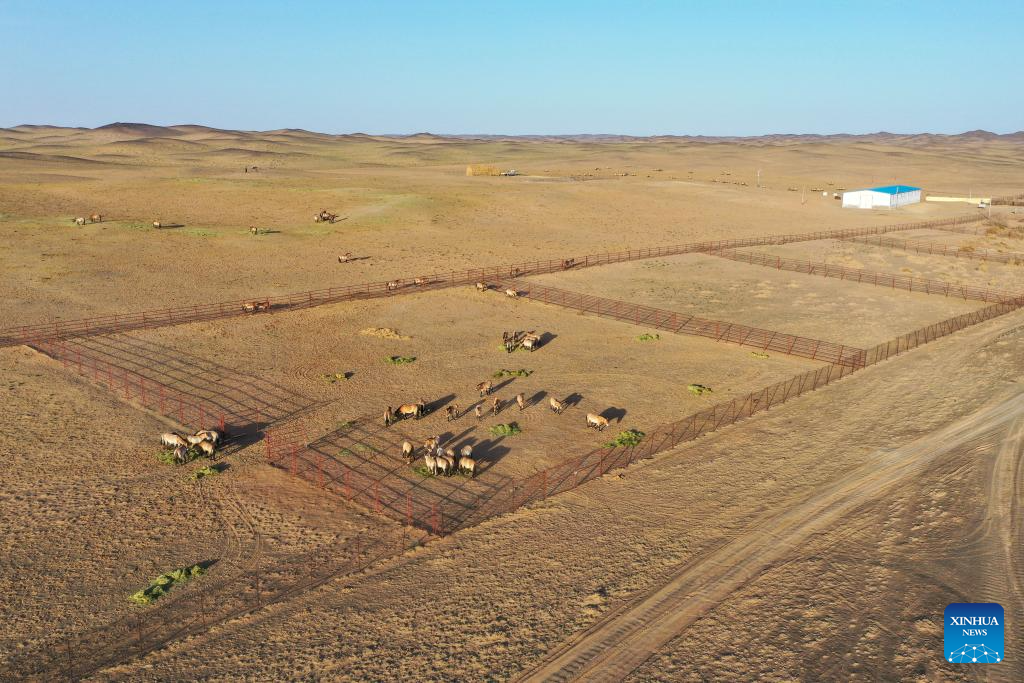
An aerial drone photo taken on April 21, 2026 shows Przewalski's horses waiting to be released into the wild at a monitoring station in the Kalamaili Nature Reserve in northwest China's Xinjiang Uygur Autonomous Region. A total of 30 Przewalski's horses were successfully reintroduced to the Kalamaili Nature Reserve on Wednesday after completing rewilding training. The Przewalski's horse, a globally endangered species under first-class national protection in China, was once extinct in the wild within the country. In 1985, China launched a reintroduction program, bringing the horses back from abroad and establishing a Przewalski's horse breeding base in Xinjiang. After more than 40 years of scientific protection, breeding and rewilding efforts, the number of wild and artificially-bred Przewalski's horses continues to expand in China. In Xinjiang alone, the wild population size has grown steadily to 392. (Xinhua/Ding Lei)
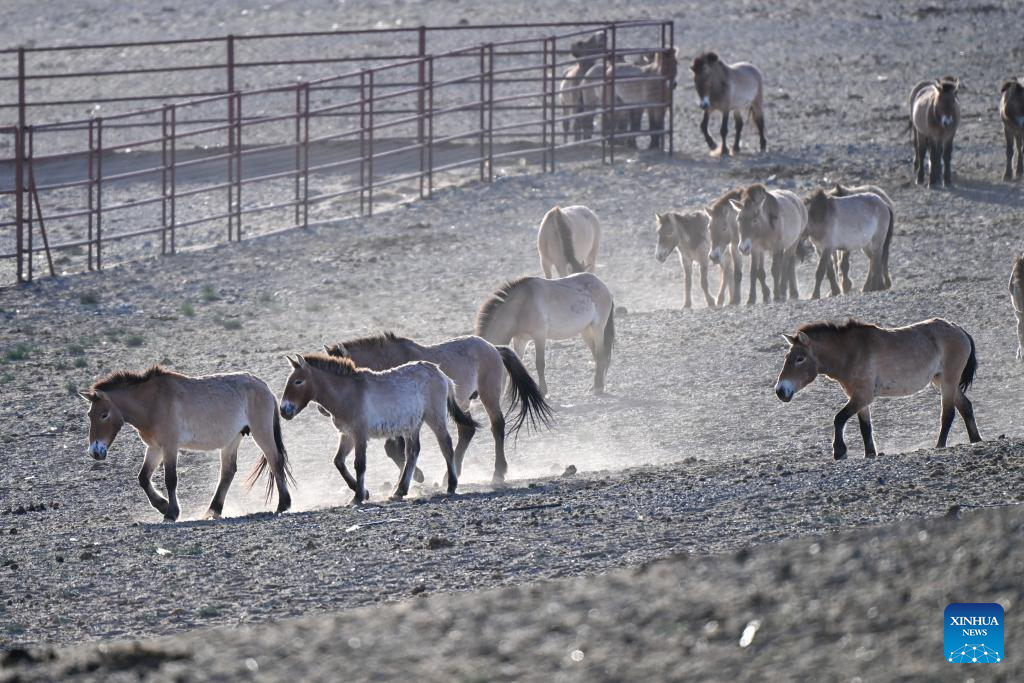
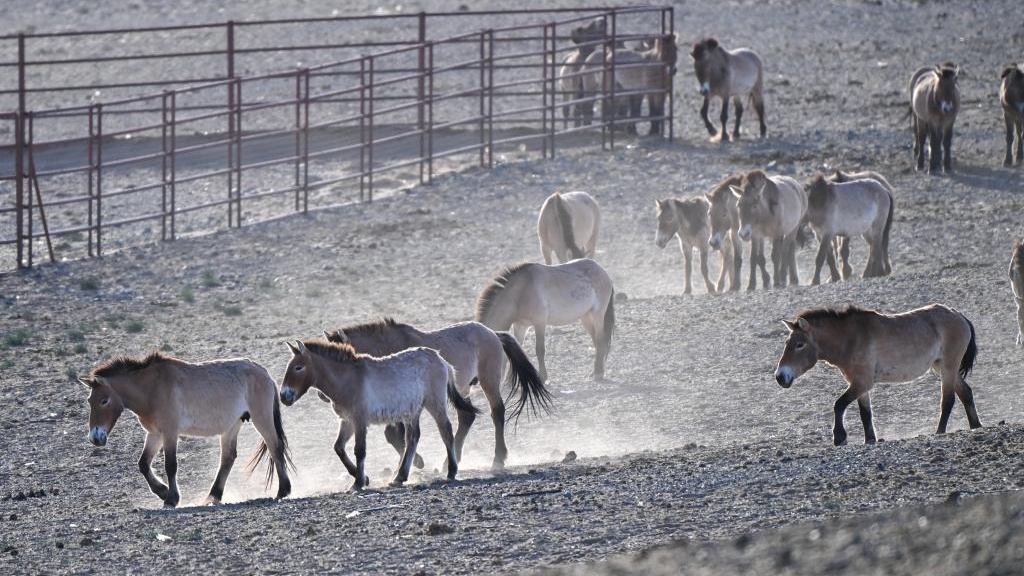
This photo taken on April 21, 2026 shows Przewalski's horses at a monitoring station in the Kalamaili Nature Reserve in northwest China's Xinjiang Uygur Autonomous Region. A total of 30 Przewalski's horses were successfully reintroduced to the Kalamaili Nature Reserve on Wednesday after completing rewilding training. The Przewalski's horse, a globally endangered species under first-class national protection in China, was once extinct in the wild within the country. In 1985, China launched a reintroduction program, bringing the horses back from abroad and establishing a Przewalski's horse breeding base in Xinjiang. After more than 40 years of scientific protection, breeding and rewilding efforts, the number of wild and artificially-bred Przewalski's horses continues to expand in China. In Xinjiang alone, the wild population size has grown steadily to 392. (Xinhua/Ding Lei)
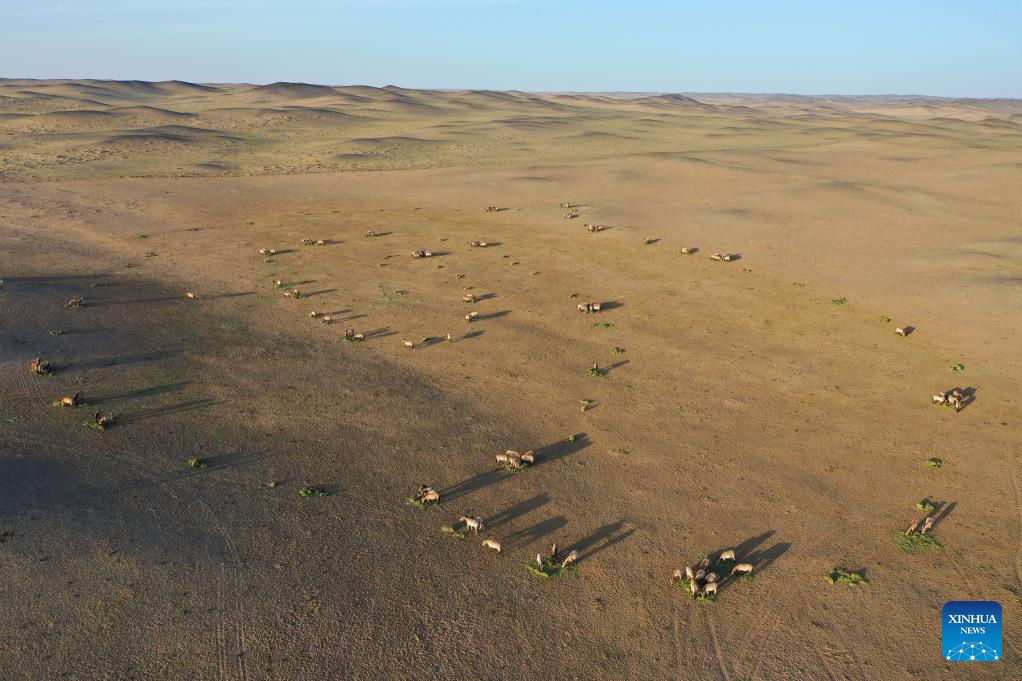
An aerial drone photo taken on April 21, 2026 shows Przewalski's horses at a monitoring station in the Kalamaili Nature Reserve in northwest China's Xinjiang Uygur Autonomous Region. A total of 30 Przewalski's horses were successfully reintroduced to the Kalamaili Nature Reserve on Wednesday after completing rewilding training. The Przewalski's horse, a globally endangered species under first-class national protection in China, was once extinct in the wild within the country. In 1985, China launched a reintroduction program, bringing the horses back from abroad and establishing a Przewalski's horse breeding base in Xinjiang. After more than 40 years of scientific protection, breeding and rewilding efforts, the number of wild and artificially-bred Przewalski's horses continues to expand in China. In Xinjiang alone, the wild population size has grown steadily to 392. (Xinhua/Ding Lei)
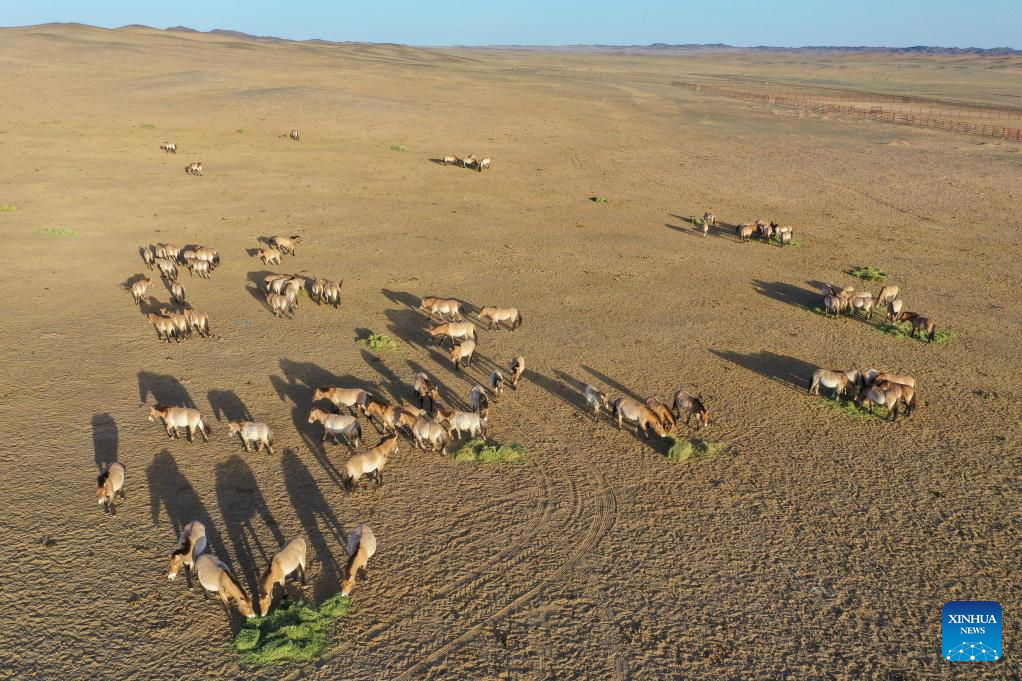
An aerial drone photo taken on April 21, 2026 shows Przewalski's horses at a monitoring station in the Kalamaili Nature Reserve in northwest China's Xinjiang Uygur Autonomous Region. A total of 30 Przewalski's horses were successfully reintroduced to the Kalamaili Nature Reserve on Wednesday after completing rewilding training. The Przewalski's horse, a globally endangered species under first-class national protection in China, was once extinct in the wild within the country. In 1985, China launched a reintroduction program, bringing the horses back from abroad and establishing a Przewalski's horse breeding base in Xinjiang. After more than 40 years of scientific protection, breeding and rewilding efforts, the number of wild and artificially-bred Przewalski's horses continues to expand in China. In Xinjiang alone, the wild population size has grown steadily to 392. (Xinhua/Ding Lei)
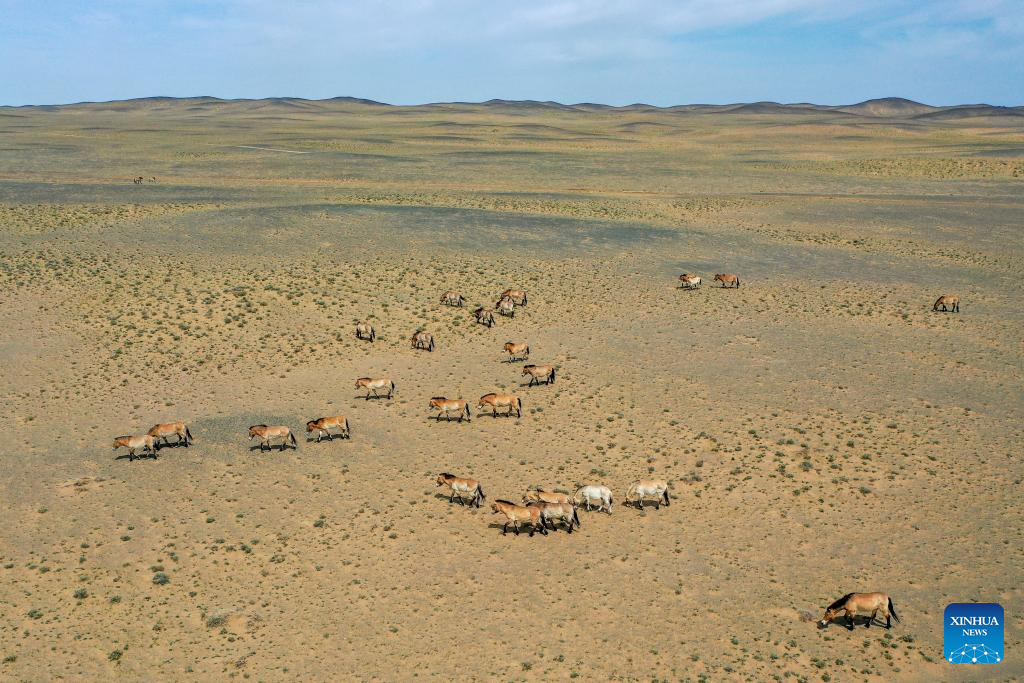
An aerial drone photo taken on April 22, 2026 shows Przewalski's horses released into the wild in the Kalamaili Nature Reserve in northwest China's Xinjiang Uygur Autonomous Region. A total of 30 Przewalski's horses were successfully reintroduced to the Kalamaili Nature Reserve on Wednesday after completing rewilding training. The Przewalski's horse, a globally endangered species under first-class national protection in China, was once extinct in the wild within the country. In 1985, China launched a reintroduction program, bringing the horses back from abroad and establishing a Przewalski's horse breeding base in Xinjiang. After more than 40 years of scientific protection, breeding and rewilding efforts, the number of wild and artificially-bred Przewalski's horses continues to expand in China. In Xinjiang alone, the wild population size has grown steadily to 392. (Xinhua/Ding Lei)
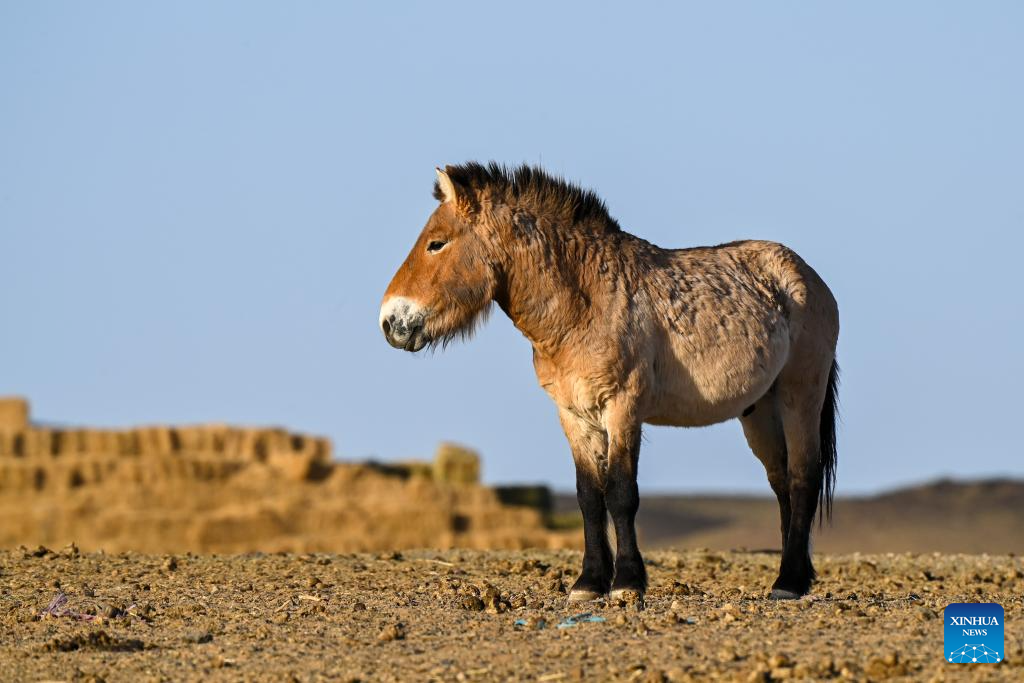
This photo taken on April 21, 2026 shows a Przewalski's horse at a monitoring station in the Kalamaili Nature Reserve in northwest China's Xinjiang Uygur Autonomous Region. A total of 30 Przewalski's horses were successfully reintroduced to the Kalamaili Nature Reserve on Wednesday after completing rewilding training. The Przewalski's horse, a globally endangered species under first-class national protection in China, was once extinct in the wild within the country. In 1985, China launched a reintroduction program, bringing the horses back from abroad and establishing a Przewalski's horse breeding base in Xinjiang. After more than 40 years of scientific protection, breeding and rewilding efforts, the number of wild and artificially-bred Przewalski's horses continues to expand in China. In Xinjiang alone, the wild population size has grown steadily to 392. (Xinhua/Ding Lei)